

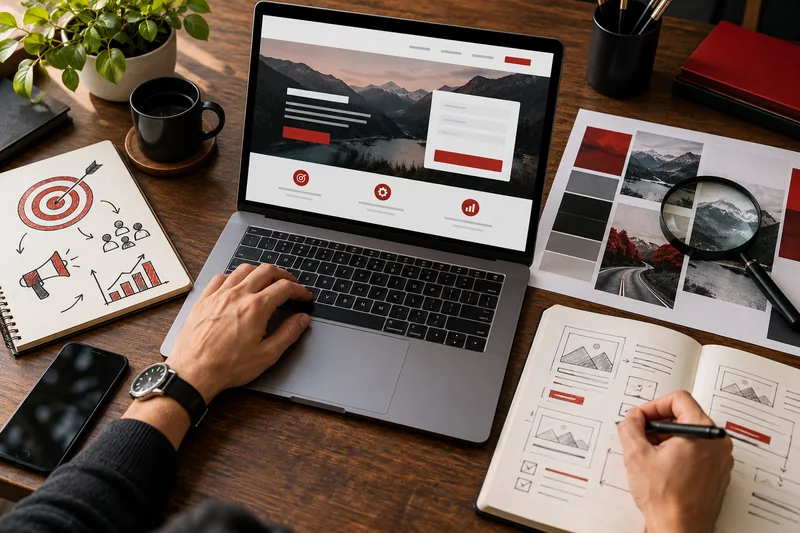
An advertisement makes a promise about what a visitor will find. The landing page should continue that conversation. If the ad promotes website development, the page should quickly explain the relevant service, scope and next step. Establish that match before adding animations, competing offers or a long form. A focused page gives visitors a clearer basis for deciding whether to contact you.
Continue the advertisement’s message
Use a heading that identifies the service and its audience, supported by a short description and a clear next action. Visitors should not need to search a broad homepage for information promised by a specific ad. Google’s landing-page guidance highlights relevance, usefulness and the expectations created by the advertisement. Apply that principle through clear content and navigation, rather than relying on promotional slogans.
Make the offer’s boundaries visible
Explain what can be requested and what is included in any advertised starting scope. If cost depends on pages, integrations, content or custom workflows, describe those factors. Separate third-party charges and advertising spend from development or management fees where relevant. Clear boundaries help customers decide whether the offer fits and make the eventual conversation more useful for both the prospect and your sales team.
Show evidence that belongs to the business
Use genuine work examples and describe your role accurately. Display reviews or client names only with appropriate permission and context. Avoid invented outcomes or stock-photo testimonials. Explain the process the prospect will actually follow, such as a brief, scope discussion and proposal. Concrete information helps someone assess the service even when they are still researching and not ready to send an enquiry.
Ask only for useful initial information
Collect the details needed for a meaningful response. A name, valid contact route and short requirement may be enough to start. Other fields should have a clear purpose. Provide visible labels, understandable validation and a useful error message. Preserve the information if delivery fails. After confirmed success, a thank-you page can explain the next step without asking the visitor to repeat the same request.
Measure confirmed actions
Define a lead before installing tracking. Clicking a button is different from an enquiry being accepted by the receiving system. Record the completed action when the application can confirm that outcome. Keep analytics separate from essential form behaviour: a tracking failure should not prevent contact or confirmation. Review lead quality and follow-up results as well as event counts when judging the usefulness of the page.
Test after material changes
Review the page on a phone and test submission in an approved setup. Check links, verification, error states and the confirmation route. A well-designed page does not guarantee campaign results; the offer, audience, ad setup and follow-up also matter. Maintain a clear test checklist so changes to content, scripts or integrations do not quietly interrupt the path from advertisement to enquiry.
Your practical checklist
- A heading matching the advertisement
- Transparent scope and charges
- Genuine relevant proof
- Helpful validation and confirmation
- Tracking after confirmed success